

The United Nations Office at Geneva
Multimedia Newsroom
Press Conferences | OHCHR
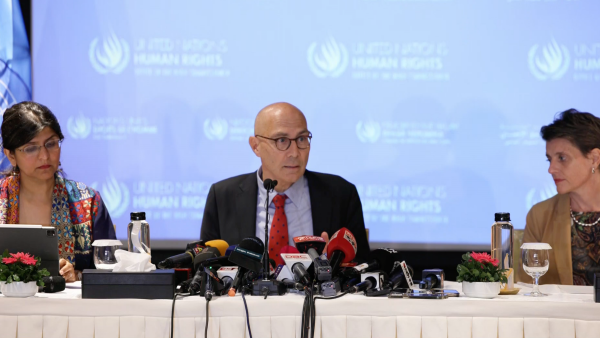
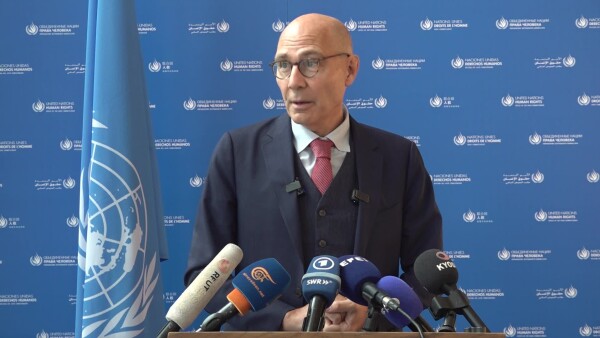
Conférence de presse du HCDH : Volker Türk, Haut-Commissaire des Nations Unies aux droits de l'homme, au Bangladesh, le 30 octobre 2024
Le Haut-Commissaire des Nations Unies aux droits de l'homme, Volker Türk, se rendra au Bangladesh
Le Haut-Commissaire des Nations Unies aux droits de l'homme, Volker Türk, doit se rendre au Bangladesh du 29 au 30 octobre 2024, où il tiendra plusieurs réunions avec des hauts responsables et des représentants de la société civile, entre autres.
Au cours de sa visite, le Haut-Commissaire doit rencontrer le Conseiller en chef Muhammad Yunus, plusieurs conseillers de différents ministères, le Président de la Cour suprême, le chef de l'armée et les dirigeants de plusieurs commissions de réforme.
Türk prononcera également un discours à l'Université de Dhaka, où il rencontrera des étudiants impliqués dans le récent mouvement de protestation.
Il tiendra des réunions avec des agences de l'ONU et des membres de missions diplomatiques au Bangladesh.
Le Haut-Commissaire tiendra une conférence de presse à Dhaka à la fin de sa mission le mercredi 30 octobre à 17h30. L'accès à la conférence de presse sera strictement limité aux médias accrédités.
Des détails supplémentaires concernant la conférence de presse seront communiqués localement.
Pour plus d'informations et demandes des médias :
Voyageant avec le Haut-Commissaire : Ravina Shamdasani : +41 22 917 9169 / ravina.shamdasani@un.org
À Dhaka : Nadim Farhad : +880 1716454233 / nadim.farhad@un.org
À Genève : Liz Throssell : +41 22 917 9296 / elizabeth.throssell@un.org et Jeremy Laurence : +41 22 917 9383 / jeremy.laurence@un.org
Taguez et partagez
X @UNHumanRights
Facebook unitednationshumanrights
Instagram @unitednationshumanrights
HISTOIRE : Le Haut-Commissaire des Nations Unies aux droits de l'homme, Volker Türk, conclut une visite officielle au Bangladesh
TRT : 03:11
SOURCE : OHCHR
RESTRICTIONS : AUCUNE
LANGUE : Anglais/NATS
FORMAT : 16:9
DATELINE : 30 octobre 2024 DHAKA, BANGLADESH
LISTE DE PLANS
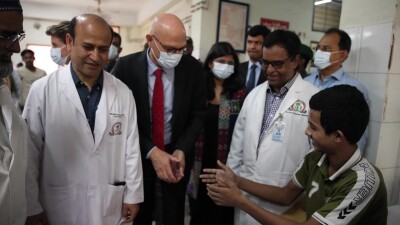
- Plans intérieurs : divers plans du Haut-Commissaire visitant l'hôpital Nitol, où certains étudiants ont été blessés par balle lors des manifestations de juillet.
- Plan extérieur : rues de Dhaka
- Plans intérieurs : réunion du Haut-Commissaire avec les chefs des commissions de réforme
- Plan intérieur : plan large de la conférence de presse
- EXTRAIT SONORE (Anglais)— Volker Türk, Haut-Commissaire des Nations Unies aux droits de l'homme : « Ce moment unique et sans précédent dans l'histoire du Bangladesh est le résultat de jeunes femmes et hommes qui sont descendus dans la rue – au péril de leur vie – pour exprimer qu'ils en avaient assez d'être ignorés et marginalisés,»
- Plan de coupe : conférence de presse
- EXTRAIT SONORE (Anglais)— Volker Türk, Haut-Commissaire des Nations Unies aux droits de l'homme : «Une approche inclusive, où chaque voix est entendue et valorisée indépendamment de la classe, du genre, de la race, de l'idéologie politique, de l'identité ou de la religion, sera essentielle – reflétant les aspirations et la diversité du mouvement qui a déclenché cette transition,»
- Plan extérieur : Plan en mouvement arrivant au bureau du Conseiller en chef
- Plans intérieurs : Türk rencontrant le Dr Muhammad Yunus, Conseiller en chef du Bangladesh
- Plan intérieur : conférence de presse
- EXTRAIT SONORE (Anglais)— Volker Türk, Haut-Commissaire des Nations Unies aux droits de l'homme : « Les femmes sont au cœur des mouvements de justice sociale, y compris les manifestations de juillet. Elles doivent être à l'avant-garde pendant la transition et au-delà. Les femmes doivent être visibles, en particulier dans les postes de direction et de prise de décision. La participation des minorités ethniques et religieuses dans les structures de réforme, ainsi que des peuples autochtones, est également cruciale.»
- Plan intérieur : conférence de presse
- EXTRAIT SONORE (Anglais)— Volker Türk, Haut-Commissaire des Nations Unies aux droits de l'homme : «La justice pénale est essentielle, mais il est crucial de s'assurer que les accusations ne soient pas portées à la hâte, et que le processus équitable et les normes de procès équitable soient respectés tout au long,»
- Plan intérieur : conférence de presse
- EXTRAIT SONORE (Anglais)— Volker Türk, Haut-Commissaire des Nations Unies aux droits de l'homme : «Il est prioritaire pour mon bureau de soutenir ce pays dynamique et diversifié et son peuple pendant cette période de transition, et de faire tout ce que nous pouvons pour aider à garantir la protection et la promotion des droits de l'homme pour tous au Bangladesh. »
SCÉNARIO
Le gouvernement intérimaire du Bangladesh a hérité de défis massifs sur tous les fronts, y compris économique, développement, social et politique, a déclaré mercredi le Haut-Commissaire des Nations Unies aux droits de l'homme, Volker Türk, alors qu'il concluait une mission officielle de deux jours dans le pays.
«Ce moment unique et sans précédent dans l'histoire du Bangladesh est le résultat de jeunes femmes et hommes qui sont descendus dans la rue – au péril de leur vie – pour exprimer qu'ils en avaient assez d'être ignorés et marginalisés,» a déclaré Türk lors d'une conférence de presse à Dhaka.
«Une approche inclusive, où chaque voix est entendue et valorisée indépendamment de la classe, du genre, de la race, de l'idéologie politique, de l'identité ou de la religion, sera essentielle – reflétant les aspirations et la diversité du mouvement qui a déclenché cette transition,» a-t-il souligné.
«Les femmes sont au cœur des mouvements de justice sociale, y compris les manifestations de juillet. Elles doivent être à l'avant-garde pendant la transition et au-delà. Les femmes doivent être visibles, en particulier dans les postes de direction et de prise de décision. La participation des minorités ethniques et religieuses dans les structures de réforme, ainsi que des peuples autochtones, est également cruciale.»
Mercredi, Türk a rencontré le Conseiller en chef du Bangladesh, le Dr Muhammad Yunus. Türk a salué les déclarations du Conseiller en chef qui renforcent l'engagement du Bangladesh envers les droits de l'homme, la justice sociale et la responsabilité, reconnaissant la nécessité de réformes complètes dans diverses institutions, y compris les forces de l'ordre, ainsi que la nécessité de s'attaquer aux inégalités économiques.
La recherche de justice pour la violence brutale contre les manifestants et d'autres personnes – y compris des enfants – tuées et gravement blessées en juillet et août est une priorité, a signalé Türk, notant que plus tôt mercredi, il avait visité l'hôpital Nitol, où certains étudiants blessés par balle lors des manifestations de juillet sont encore en traitement, nécessitant souvent plusieurs interventions chirurgicales.
«La justice pénale est essentielle, mais il est crucial de s'assurer que les accusations ne soient pas portées à la hâte, et que le processus équitable et les normes de procès équitable soient respectés tout au long,» a-t-il déclaré.
Türk a également exprimé son soutien et sa solidarité envers le Bangladesh pour l'accueil des réfugiés rohingyas, notant que la situation dans l'État de Rakhine s'aggrave. Il est important d'adopter une approche flexible et humanitaire, et de garantir le non-refoulement et la protection des nouveaux arrivants, a-t-il souligné.
Le Haut-Commissaire a déclaré que la mission d'enquête de son bureau examine les allégations d'attaques contre les minorités entre le 5 et le 15 août. Il a souligné qu'il est vital que les autorités réagissent rapidement à tout incident signalé, en menant des enquêtes approfondies et en tenant les auteurs responsables. Il a également déclaré que son bureau, par une présence renforcée au Bangladesh, continuera d'accompagner et de soutenir le processus de transition.
«Il est prioritaire pour mon bureau de soutenir ce pays dynamique et diversifié et son peuple pendant cette période de transition, et de faire tout ce que nous pouvons pour aider à garantir la protection et la promotion des droits de l'homme pour tous au Bangladesh, » a déclaré le Haut-Commissaire.
FIN
Pour plus d'informations et demandes médias, veuillez contacter
Ravina Shamdasani – voyageant avec le Haut-Commissaire - ravina.shamdasani@un.org
Liz Throssell + 41 22 917 9296 / elizabeth.throssell@un.org
Thameen Al-Kheetan - + 41 76 223 77 62 / thameen.alkheetan@un.org
Taguer et partager –
Twitter: @UNHumanRights
Facebook: unitednationshumanrights
Instagram : @unitednationshumanrights
Similar Stories
1
1
1
Press Conferences | UN WOMEN , WFP , WHO
UN WOMEN: Sudan Women and girls one year after the fall of El Fasher; increasing drone attacks across the country; WFP: DRC - Ebola spreads to eighth DRC province as WFP delivers food, builds treatment centres and keeps supplies moving; WHO - Update on Ebola (Bundibugyo Virus Disease)
1
12
1
1
Press Conferences , Images | UNOG
Closing Press Conference following the Sixth Consultative Meeting on Enhancing Coordination of Peace Initiatives and Efforts in Sudan

2
17
1
2
Edited News , Press Conferences , Images | OCHA , WMO
Two UN agencies teamed up on Wednesday to issue an appeal for immediate assistance to help communities already being impacted by the strongest El Niño on record.
1
1
1
Press Conferences | CITES
Wildlife trade and conservation policy discussions at the 81st meeting of the CITES Standing Committee (SC81)
1
1
1
Press Conferences | UNHCR , UNCTAD , WMO , OCHA , UNICEF , WHO
UNHCR Hungary’s 1956 Refugee Crisis: 70 Years On, UNCTAD World Investment Forum 2026, Doha, WMO Greenhouse Gas Bulletin and Climate Update for COP31, OCHA Afghanistan: Malnutrition, Girls’ Education and Recovery, UNICEF Yemen: Child Malnutrition and Unsafe Water in Taiz, WHO Inequalities in Noncommunicable Diseases and Risk Factors
1
1
1
Press Conferences | UNHCR
End of UNHCR's 77th Annual Executive Committee (ExCom) meeting week
1
1
1
Press Conferences | UNICEF , IOM , UNHCR
UN Special Assistant to the Personal Envoy Office (SUDAN): Peace Initiatives and Efforts in Sudan; UNICEF: Dire situation of children in Gaza; IOM: Damaged Homes and Energy Attacks Risk Displacing Ukrainians for this winter; UNHCR: update on EXCOM week

1
1
1
Press Conferences | IOM , UNDRR
UN stresses importance of household preparedness for disaster risk reduction.
1
1
1
Statements , Press Conferences | OHCHR
1
1
1
Press Conferences | UNHCR , UNICEF , IFRC , OHCHR , UN WOMEN , IOM , OCHA , WHO
UNHCR – ExCom Meeting, UNICEF – Nepal Recovery, IFRC – Flash Floods, WHO – Mental Health, IOM – South Sudan Floods, OCHA – DRC Humanitarian aid, UNHCR – Sahel Displacement, UNICEF – Yemen Update, IOM – Gaza Shelter, UN Women – Gaza Women, OHCHR – Arrests and detentions of Syrians by Israeli force
2
1
2
Press Conferences | UNCTAD
Presentation of the Trade and Developement Report 2026
Embargoed until 9 October 2026 at 11 a.m. (Geneva Time)
UNCTAD: UNCTAD’s flagship report finds that governments increasingly use industrial, trade, financial and technology policies to pursue economic and national security objectives. Market access and the ability to move into higher-value activities now depend more heavily on technology, finance and geopolitics.
1
1
1
Press Conferences | UPU
Release of the State of the Postal Sector Report 2026