

The United Nations Office at Geneva
Multimedia Newsroom
Press Conferences , Edited News
Conferencia de prensa de la OCAH con Lynn Hastings 13.12.2023
HISTORIA
Alto el fuego en Gaza ‘en el interés de todos’: coordinador humanitario de la ONU
En medio de continuos bombardeos israelíes desde el aire, tierra y mar en toda Gaza, el principal funcionario de ayuda de la ONU en el Territorio Palestino Ocupado insistió en que un alto el fuego era “la única manera de avanzar” para ayudar a asegurar un futuro pacífico para todos los involucrados en el conflicto.
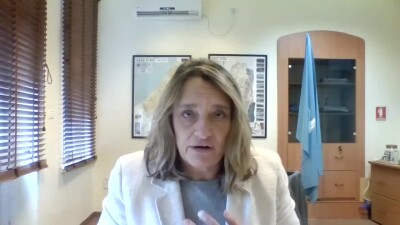
Hablando desde Ginebra a través de Zoom, Lynn Hastings, Coordinadora Humanitaria de la ONU en el Territorio Palestino Ocupado, dijo a los periodistas en Ginebra que la situación en el enclave era terrible.
Esto incluía la ciudad de Rafah en el sur, mientras que los intensos combates sostenidos continuaban entre las fuerzas israelíes y los grupos armados palestinos en Khan Younis.
“Absolutamente necesitamos un alto el fuego, esta es la única manera de avanzar,” dijo. “En este momento, lo que está sucediendo en el terreno no va a traer paz y seguridad ni a los palestinos ni a los israelíes por muchos, muchos años, si no generaciones por venir,” dijo la Sra. Hastings. “Un alto el fuego está en el interés de todos en este momento.”
Según los últimos datos de la Oficina de Coordinación de Asuntos Humanitarios de la ONU (OCHA), que citó al Ministerio de Salud en Gaza, entre el 7 de octubre y el 12 de diciembre, al menos 18,205 palestinos han sido asesinados en la Franja. Alrededor del 70 por ciento eran mujeres y niños y alrededor de 50,100 han sido heridos.
Muchas más personas están desaparecidas, presumiblemente enterradas bajo los escombros, esperando ser rescatadas o recuperadas, dijo OCHA.
La oficina de la ONU señaló que se están llevando a cabo distribuciones limitadas de ayuda en el gobernadorato de Rafah. En el resto de la Franja de Gaza, la distribución de ayuda se ha detenido en gran medida, debido a la intensidad de las hostilidades y las restricciones de movimiento a lo largo de las carreteras principales, excepto por entregas limitadas de combustible a los proveedores de servicios clave.
“Israel, como potencia ocupante, es responsable de proteger a la población civil palestina,” subrayó la Sra. Hastings. “Esto significa que tienen que proporcionar las necesidades básicas, tienen que asegurar que haya acceso humanitario sin obstáculos para aquellos que lo necesitan. No es solo para las Naciones Unidas permitir que los camiones lleguen a la frontera.”
Sobre el tema de los palestinos arrestados y detenidos, la Sra. Hastings dijo que “hasta donde sabemos, eso es sin ningún tipo de juicio. Esto es una preocupación obvia para las Naciones Unidas.” También subrayó la necesidad de permitir el acceso internacional a los rehenes tomados durante los ataques terroristas de Hamas el 7 de octubre en el sur de Israel que mataron a alrededor de 1,200 personas y provocaron la represalia de las Fuerzas de Defensa de Israel, agregando que un alto el fuego podría ser propicio para la liberación de rehenes.
La propagación de enfermedades en Gaza se ha intensificado, especialmente debido a las condiciones de vida hacinadas que han añadido presión a un sistema de salud ya abrumado, aumentando el riesgo de que la gente muera.
El martes, el Ministerio de Salud en Gaza había documentado 360,000 casos de enfermedades infecciosas en refugios, señalando que se cree que el número real es mayor.
“El sistema de salud se ha colapsado, tenemos una fórmula de libro de texto para epidemias y un desastre de salud pública,” dijo la Sra. Hastings. “Esto es en parte, por supuesto, porque estos refugios hace mucho tiempo que superaron su capacidad total con personas haciendo fila durante horas solo para llegar a un baño. Un baño disponible para cientos de personas, pueden imaginarse cómo son las condiciones de saneamiento como resultado.”
Al 11 de diciembre, según la agencia de la ONU para los refugiados palestinos (UNRWA), casi 1.9 millones de personas en Gaza, o casi el 85 por ciento de la población, se estima que están desplazadas internamente, incluidas personas que han sido desplazadas múltiples veces.
Una encuesta reciente del Programa Mundial de Alimentos de la ONU (PMA) mostró que casi la mitad de la población en el norte y un tercio en el sur están experimentando “niveles severos de hambre”. La Sra. Hastings dijo que “el 97 por ciento de los hogares en el norte y el 83 por ciento de los hogares en el sur tienen un consumo de alimentos inadecuado. Así que eso significa tal vez una comida al día, tal vez una comida cada dos días.”
Abordando informes sobre la posibilidad de inundar túneles subterráneos en Gaza con agua de mar por parte del ejército israelí, la Sra. Hastings advirtió que causaría “daños severos a la ya frágil infraestructura de agua y alcantarillado…y podría impactar a generaciones venideras” al contaminar el acuífero, una fuente crucial de agua potable.
La Sra. Hastings también destacó el aumento de la violencia en la Cisjordania ocupada donde ya han sido asesinados 464 palestinos, incluidos 109 niños, un récord desde 2005. Desde el 7 de octubre, 271 palestinos han sido asesinados con 69 niños. Alrededor de 3,000 palestinos han sido detenidos y no está claro si se les ha dado un juicio, dijo.
Con respecto a los incidentes de violencia de colonos en Cisjordania, se han registrado un total de 336 desde el 7 de octubre, representando cinco por día ahora, en comparación con dos por día en 2022.
-fin-
HISTORIA: Situación humanitaria en el Territorio Palestino Ocupado – Lynn Hastings
TRT: 3:01”
SOURCE: UNTV CH
IDIOMA: INGLÉS
RELACIÓN DE ASPECTO: 16:9
FECHA: 13 de diciembre de 2023 - GINEBRA, SUIZA
LISTA DE TOMAS
- Toma exterior amplia: ONU Ginebra.
- DECLARACIÓN (INGLÉS) – Lynn Hastings, Coordinadora Humanitaria para el Territorio Palestino Ocupado: “Absolutamente necesitamos un alto el fuego, esta es la única manera de avanzar. En este momento, lo que está sucediendo en el terreno no va a traer paz y seguridad ni a los palestinos ni a los israelíes por muchos, muchos años, si no generaciones. Así que, un alto el fuego es en el interés de todos en este momento.”
- Toma de recurso: Toma amplia, edificio exterior de la ONU Ginebra con calle de banderas
- DECLARACIÓN (INGLÉS) – Lynn Hastings, Coordinadora Humanitaria para el Territorio Palestino Ocupado: “Israel, como potencia ocupante, es responsable de proteger a la población civil palestina. Esto significa que deben proporcionar las necesidades básicas, deben asegurar que haya acceso humanitario sin impedimentos para aquellos que lo necesiten. No es solo para que las Naciones Unidas permitan que los camiones lleguen a la frontera.”
- Toma de recurso: Toma media, edificio exterior de la ONU con bandera de la ONU
- DECLARACIÓN (INGLÉS) – Lynn Hastings, Coordinadora Humanitaria para el Territorio Palestino Ocupado: “Ahora estamos viendo a algunos palestinos siendo, supongo, arrestados y detenidos. Y hasta donde sabemos, eso es sin ningún tipo de juicio. Esto es una preocupación obvia para las Naciones Unidas. Y luego, por supuesto, también seguimos muy preocupados por la liberación de rehenes, lo cual podría suceder si hubiera un alto el fuego. Mientras tanto, todos los que están en algún tipo de detención o son rehenes, etc., necesitan tener acceso para asegurarse de que sus condiciones sean apropiadas.”
- Toma de recurso: Primer plano, edificio exterior de la ONU Ginebra con bandera de la ONU
- DECLARACIÓN (INGLÉS) - Lynn Hastings, Coordinadora Humanitaria para el Territorio Palestino Ocupado: “El sistema de salud ha colapsado. Tenemos una fórmula de libro de texto para epidemias y un desastre de salud pública. Esto es en parte, por supuesto, porque estos refugios han superado hace mucho tiempo su capacidad total con personas haciendo fila durante horas solo para llegar a un baño. Un baño disponible para cientos de personas, pueden imaginarse cómo son las condiciones de saneamiento como resultado.”
- Toma de recurso: Toma media, edificio exterior de la ONU Ginebra con calle de banderas
- DECLARACIÓN (INGLÉS) - Lynn Hastings, Coordinadora Humanitaria para el Territorio Palestino Ocupado: “El 97 por ciento de los hogares en el norte y el 83 por ciento de los hogares en el sur tienen un consumo de alimentos inadecuado. Eso significa tal vez una comida al día, tal vez una comida cada un par de días. En el norte, es casi el 50 por ciento de los hogares que han experimentado niveles severos de hambre y en el sur, creo que es un tercio.”
- Toma de recurso: Toma media, edificio exterior de la ONU Ginebra con calle de banderas
- Lynn Hastings, Coordinadora Humanitaria para el Territorio Palestino Ocupado: “Estamos viendo muchos informes sobre el potencial de inundación de túneles. No sabemos si esto está confirmado o si de hecho está sucediendo ya. Pero queremos señalar que si esto llegara a suceder, se anticipa que causará graves daños a la ya frágil infraestructura de agua y alcantarillado que hay en Gaza, y podría impactar a generaciones futuras, dejando inutilizable el acuífero, que es una fuente crucial de agua potable una vez que ha sido desalinizada para las personas en Gaza.”
- Toma de recurso: Toma media, edificio exterior de la ONU Ginebra con calle de banderas
Conferencia de prensa virtual / Conferencia de prensa virtual
OCHA
Tema:
Situación humanitaria en el Territorio Palestino Ocupado
Orador:
- Lynn Hastings, Coordinadora Humanitaria para el Territorio Palestino Ocupado
Fecha/hora:
Miércoles, 13 de diciembre de 2023 a las 11 a.m. CET
Similar Stories
1
1
1
Edited News | OCHA , UNICEF , WFP
Aid agencies warned on Friday of the fast-developing humanitarian emergency inside Taiz City in Yemen, which has been encircled by de facto Houthi forces fighting government troops along the country’s west coast.
1
1
1
Press Conferences | UN WOMEN , WFP , WHO
UN WOMEN: Sudan Women and girls one year after the fall of El Fasher; increasing drone attacks across the country; WFP: DRC - Ebola spreads to eighth DRC province as WFP delivers food, builds treatment centres and keeps supplies moving; WHO - Update on Ebola (Bundibugyo Virus Disease)
1
12
1
1
Press Conferences , Images | UNOG
Closing Press Conference following the Sixth Consultative Meeting on Enhancing Coordination of Peace Initiatives and Efforts in Sudan

2
17
1
2
Edited News , Press Conferences , Images | OCHA , WMO
Two UN agencies teamed up on Wednesday to issue an appeal for immediate assistance to help communities already being impacted by the strongest El Niño on record.

3
16
2
2
Edited News , B-roll , Conferences , Images | UNITED NATIONS , UNOG
Sixth Consultative Meeting on Enhancing Coordination of Peace Initiatives and Efforts for Sudan
1
1
1
Press Conferences | CITES
Wildlife trade and conservation policy discussions at the 81st meeting of the CITES Standing Committee (SC81)

1
1
1
Edited News | UNICEF , WHO , UNHCR
Yemen war continues to force families from homes amid hunger and disease
More than 250,000 people have now fled renewed fighting in Yemen, the UN said on Tuesday, citing particular concern for those sheltering in the southwestern city of Taiz and the wider governorate, where access is “essentially blocked”.
1
1
1
Press Conferences | UNHCR , UNCTAD , WMO , OCHA , UNICEF , WHO
UNHCR Hungary’s 1956 Refugee Crisis: 70 Years On, UNCTAD World Investment Forum 2026, Doha, WMO Greenhouse Gas Bulletin and Climate Update for COP31, OCHA Afghanistan: Malnutrition, Girls’ Education and Recovery, UNICEF Yemen: Child Malnutrition and Unsafe Water in Taiz, WHO Inequalities in Noncommunicable Diseases and Risk Factors

1
1
1
Press Conferences | UNHCR
End of UNHCR's 77th Annual Executive Committee (ExCom) meeting week

1
1
1
Edited News | UNICEF
A little over one year since a ceasefire agreement was announced between Hamas fighters and Israel, more than 340 children have been reported killed and hundreds more injured, the UN Children’s Fund, UNICEF, said on Friday.

1
1
1
Press Conferences | UNICEF , IOM , UNHCR
UN Special Assistant to the Personal Envoy Office (SUDAN): Peace Initiatives and Efforts in Sudan; UNICEF: Dire situation of children in Gaza; IOM: Damaged Homes and Energy Attacks Risk Displacing Ukrainians for this winter; UNHCR: update on EXCOM week

1
1
1
Press Conferences | IOM , UNDRR
UN stresses importance of household preparedness for disaster risk reduction.