

The United Nations Office at Geneva
Multimedia Newsroom
INTRIGUE
Suite aux graves allégations selon lesquelles plusieurs employés de l'agence de l'ONU venant en aide aux réfugiés palestiniens (UNRWA) dans la bande de Gaza auraient été impliqués dans les attaques terroristes du 7 octobre dans le sud d'Israël, ce qui a conduit de nombreux États à suspendre temporairement leurs paiements à l'organisation d'aide, l'Organisation mondiale de la santé (OMS) a lancé aujourd'hui (30 janvier) un appel aux donateurs pour qu'ils "ne suspendent pas leur financement à l'UNRWA en ce moment critique. La coupure des fonds ne fera que nuire au peuple de Gaza qui a désespérément besoin de soutien".
Lors d'un briefing avec des journalistes à l'ONU à Genève, le porte-parole de l'OMS, Christian Lindmeier, a déclaré que "l'activité criminelle ne peut jamais rester impunie. Mais la discussion en ce moment est beaucoup plus une distraction de ce qui se passe réellement chaque jour, chaque heure, chaque minute à Gaza. C'est une distraction des près de 27 000 décès à ce jour, dont 70 % sont des femmes et des enfants".
M. Lindmeier a ajouté que "c'est une distraction pour empêcher toute une population d'avoir accès à de l'eau potable, de la nourriture, un abri. C'est une distraction pour empêcher l'électricité d'entrer à Gaza depuis plus de 100 jours".
En plus de ses programmes dans la bande de Gaza, l'UNRWA fournit une aide humanitaire vitale aux réfugiés palestiniens en Jordanie, au Liban, en Syrie et en Cisjordanie, y compris à Jérusalem-Est.
Dans la bande de Gaza, l'agence fournit une aide vitale à plus de deux millions de civils, gère des abris pour plus d'un million de personnes et fournit des services alimentaires, d'eau et de santé.
M. Lindmeier a rappelé une situation très préoccupante où "la situation alimentaire et en eau est extrêmement mauvaise, la nourriture est coupée à Gaza depuis plus de 100 jours, les approvisionnements en eau douce sont coupés, l'eau est mélangée aux eaux usées". De plus, les stations de pompage ne fonctionnent pas en raison du manque de carburant et la population est au bord de la famine.
"Nous avons eu un convoi ce matin même pour essayer d'atteindre l'hôpital Nasser avec des patients, du personnel de santé, tout le monde. Ils ont besoin de nourriture, mais la population très nécessiteuse a déjà pris les provisions - comme nous pouvons l'appeler - il s'agissait d'une auto-distribution de provisions, ce qui ne fait que montrer à quel point les besoins sont pressants", a déclaré le porte-parole de l'OMS.
Selon le dernier rapport du Bureau de la coordination des affaires humanitaires des Nations unies (OCHA), les hostilités ont été particulièrement intenses à Khan Younis, avec de violents combats signalés près des hôpitaux Nasser et Al Amal. Il y a également des rapports de Palestiniens fuyant vers la ville du sud de Rafah, qui est déjà surpeuplée, malgré le manque de passage sûr.
Le porte-parole de l'OCHA, Jens Laerke, a souligné que "l'UNRWA n'a pas cessé de travailler, l'UNRWA continue de travailler. C'est le flux de financement qui est en danger alors qu'il est irremplaçable dans l'opération humanitaire".
Le Secrétaire général de l'ONU, Antonio Guterres, tiendra aujourd'hui (30 janvier) une réunion avec les principaux donateurs de l'UNRWA à New York pour lancer un appel urgent afin de maintenir le flux de fonds vitaux.
-fin-
HISTOIRE : Mise à jour de Gaza - OMS, OCHA
DURÉE : 2:09”
SOURCE : UNTV CH
RESTRICTIONS : AUCUNE
LANGUE : ANGLAIS / NATS
FORMAT D'IMAGE : 16:9
DATE LIMITE : 30 janvier 2024 GENÈVE, SUISSE
- Plan moyen extérieur : allée du drapeau des Nations Unies
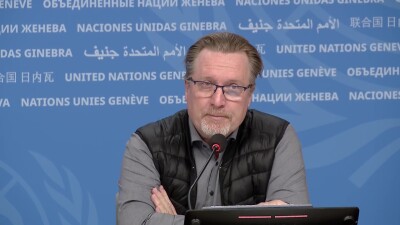
- Plan large : intervenants lors de la conférence de presse
- INTERVENTION (Anglais) – Christian Lindmeier, porte-parole de l'Organisation mondiale de la santé (OMS) : « Les activités criminelles ne peuvent jamais rester impunies. Mais la discussion actuelle détourne l'attention de ce qui se passe réellement chaque jour, chaque heure, chaque minute à Gaza. Cela détourne l'attention des près de 27 000 décès à ce jour, dont 70 % sont des femmes et des enfants.”
- Plan large : salle de presse avec des journalistes
- INTERVENTION (Anglais) – Christian Lindmeier, porte-parole de l'Organisation mondiale de la santé (OMS) : « Cela détourne l'attention du fait d'empêcher toute une population d'avoir accès à l'eau potable, à la nourriture, au logement. Cela détourne l'attention du fait d'empêcher l'électricité d'entrer à Gaza depuis plus de 100 jours.”
- Plan moyen : journaliste debout dans la salle de presse
- INTERVENTION (Anglais) – Christian Lindmeier, porte-parole de l'Organisation mondiale de la santé (OMS) : « Nous en appelons aux donateurs de ne pas suspendre leur financement à l'UNRWA en ce moment critique. La suspension du financement ne fera qu'aggraver la situation des habitants de Gaza qui ont désespérément besoin de soutien”.
- Plan rapproché : journaliste tapant sur un ordinateur portable
- INTERVENTION (Anglais) – Christian Lindmeier, porte-parole de l'Organisation mondiale de la santé (OMS) : « Nous avons eu un convoi ce matin même pour essayer d'atteindre l'hôpital Nasser avec des patients, du personnel soignant, tout le monde. Ils ont besoin de nourriture, mais la population très nécessiteuse a déjà pris les fournitures - comme nous pouvons l'appeler - il s'agissait d'une auto-distribution de fournitures, ce qui montre seulement à quel point les besoins sont criants.”
- Plan large : salle de presse avec des journalistes et des intervenants au pupitre
- INTERVENTION (Anglais) – Jens Laerke, porte-parole du Bureau de la coordination des affaires humanitaires des Nations Unies (OCHA) : « L'UNRWA n'a pas cessé de travailler, l'UNRWA continue de travailler. C'est le flux de financement qui est en danger alors qu'il est irremplaçable dans l'opération humanitaire.”
- Plan rapproché, journaliste tapant
- Plan rapproché, journaliste écoutant
- Plan rapproché, journaliste lisant
Similar Stories

1
1
1
Edited News | OCHA , UNICEF , WFP
Aid agencies warned on Friday of the fast-developing humanitarian emergency inside Taiz City in Yemen, which has been encircled by de facto Houthi forces fighting government troops along the country’s west coast.

2
17
1
2
Edited News , Press Conferences , Images | OCHA , WMO
Two UN agencies teamed up on Wednesday to issue an appeal for immediate assistance to help communities already being impacted by the strongest El Niño on record.

3
16
2
2
Edited News , B-roll , Conferences , Images | UNITED NATIONS , UNOG
Sixth Consultative Meeting on Enhancing Coordination of Peace Initiatives and Efforts for Sudan

1
1
1
Edited News | UNICEF , WHO , UNHCR
Yemen war continues to force families from homes amid hunger and disease
More than 250,000 people have now fled renewed fighting in Yemen, the UN said on Tuesday, citing particular concern for those sheltering in the southwestern city of Taiz and the wider governorate, where access is “essentially blocked”.

1
1
1
Edited News | UNICEF
A little over one year since a ceasefire agreement was announced between Hamas fighters and Israel, more than 340 children have been reported killed and hundreds more injured, the UN Children’s Fund, UNICEF, said on Friday.

1
1
1
Edited News | UNICEF , IFRC
Six weeks after Nepal’s deadly flooding disaster, communities are still struggling to rebuild their lives, but they will need sustained help as global warming increases the risk of another Himalayan catastrophe, the UN Children’s Fund (UNICEF) said on Friday.

1
1
1
Edited News | WHO
In suspected Russia plague death, testing and monitoring underway – WHO
The death of a lab worker in Russia’s Siberia region has sparked concerns about plague being the cause, the UN World Health Organization (WHO) said on Tuesday, adding that it was following the situation closely.

1
1
Edited News | OHCHR , UNOG
UN Human Rights Chief Volker Türk on Friday provided and oral update to the 63rd session of the Human rights Council on Ukraine.

1
1
1
Edited News | OHCHR , UNOG
UN Human Rights Chief Volker Türk on Friday provided and oral update to the 63rd session of the Human rights Council on the human rights situation in Haiti.

1
1
1
Edited News | WHO
Repeated delays in bringing lifesaving medicines, prosthetics and more from Israel into Gaza risk having devastating consequences on Palestinians who urgently need them in the wartorn enclave, the UN World Health Organization (WHO) said on Friday. “A truck full of non-priority supplies or the right supplies arriving too late, doesn't save lives. That's the question that actually matters," said Dr Reinhilde Van De Weerdt, WHO Representative in the OPT.

1
1
1
Edited News | WHO
DRC: Early access to care and oxygen decisive for Ebola patients’ survival – WHO
In the Democratic Republic of the Congo (DRC), health workers fighting the country’s largest-ever Ebola outbreak are struggling to overcome critical challenges to patient care, the UN World Health Organization (WHO) warned on Tuesday.

1
1
1
Edited News | OCHA , UN
Civilians in Iran are continuing to feel the consequences of months of conflict and military escalation, the UN’s top official in the country has said, as loss of life, damage to civilian infrastructure and mounting economic pressures leave many facing continued uncertainty.